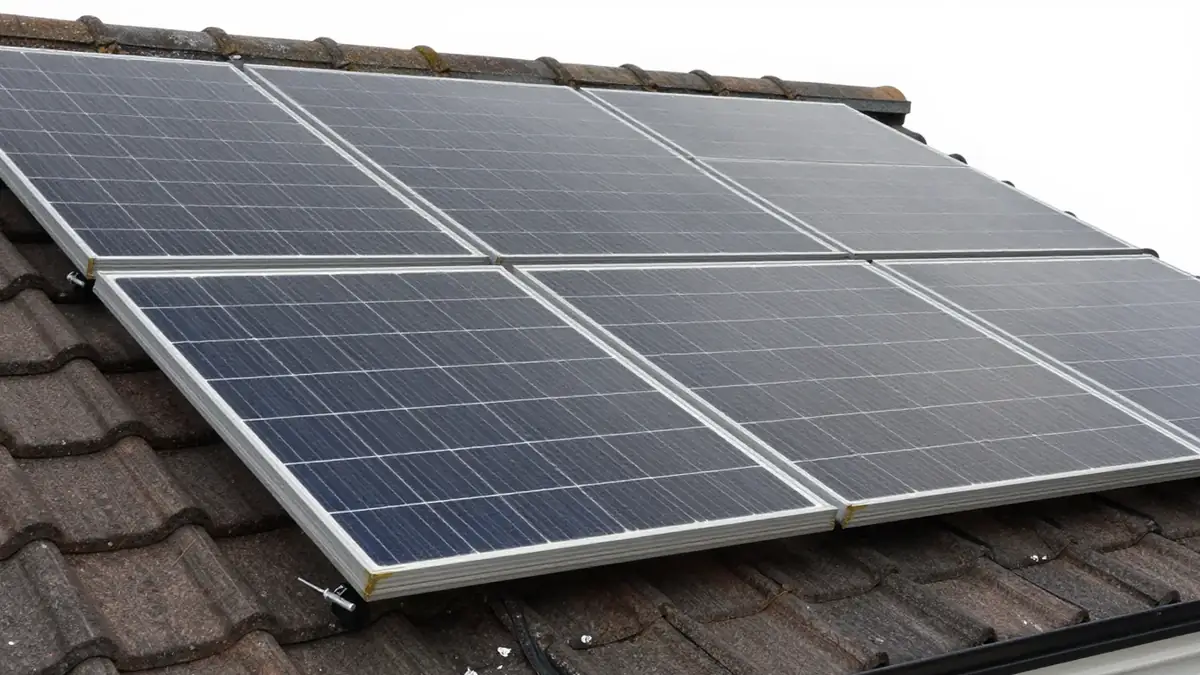
The inverter is the part of a solar system that turns the panels’ direct current into the alternating current your home uses. Quotes may name one of three set-ups. They are a string inverter, microinverters or a string inverter with power optimisers.
This guide explains how each one works, when the extra cost can make sense, and what a good quote should say.
What the inverter does
Panels produce direct current. Your home and the grid use alternating current. An inverter does the conversion. MCS describes the full system as several panels connected together with an inverter and wiring, then plugged into your home electrics (MCS).
The inverter may also wear out sooner than the panels, since MCS says panels can last over 25 years, but the inverter may need replacing in that time. So the inverter choice affects your long-term costs, not just output.
String inverter
A string inverter is one box. Which? says installers often fit inverters in the loft, close to the panels, although heat can affect them. The panels connect in series, called a string, and feed it together.
Which? calls string inverters the most common and cheapest option. However, it warns that if one panel fails or shade falls on it, that could affect your whole system. EnergySage explains that every panel on a string can produce no more than the weakest panel. For a roof with little shade, that effect may be small.
Microinverters
A microinverter is a small inverter fitted at each panel, so each panel converts its own power. Which? says micro-inverters separate the panels, so if one panel fails, the whole system carries on.
EnergySage says microinverters help on complicated roofs or roofs that get shade during the day, and that they are usually the most expensive option. However, many devices sit on the roof, so a fault may mean roof access. Ask who pays for access under the warranty. Our post on scaffolding costs explains why access matters.
Power optimisers
A power optimiser also sits at each panel. Unlike a microinverter, it does not convert the power. EnergySage says optimisers condition the DC energy and send it to a central inverter that finishes the conversion.
So you get panel-level control and still one main inverter to maintain. The trade-off is that you buy both the optimisers and the inverter. The MCS installation standard refers to module level power electronics devices, and requires a datasheet for them where they are used.
When shading changes the answer
Shading is a main reason to consider panel-level devices. MCS lists inclination, orientation and shading as the three main site factors, and says an accurate estimate of shade will typically need a site visit (MCS MIS 3002).
Where shading is present, the MCS performance estimate must show a shade factor and carry an extra note. If a roof is clear, ask why the installer recommends the costlier option. If a roof is shaded, ask for the estimate with and without it.
A mixed roof can raise the same question. If panels face different ways, see east-west versus south-facing panels. Flat roofs bring their own layout choices, which we cover in the post on solar panels on a flat roof.
What your quote should name
Under the MCS installation standard, installers must give certain information in writing at or before the point the contract is awarded. That includes the manufacturer’s datasheet for the inverter, a datasheet for any module level power electronics device, and a drawing of the panel layout.
Use this checklist when you compare.
- The inverter make, model and rated output in kW.
- Whether panel-level devices are included, and which type.
- The inverter warranty in years, and who handles a claim.
- The datasheets and layout drawing.
- The shading assumption behind the performance estimate.
Our guide to what is in a solar quote covers the rest of the list. A quote that only says “inverter included” gives you nothing to compare.
Questions to ask the installer
A few direct questions show whether a recommendation suits your roof. First, ask what shade factor the installer measured, and how it was worked out. Second, ask what the estimate would be with a plain string inverter. Third, ask how the system reports faults, and whether you can see each panel’s output.
Also ask what happens when a unit fails. A good answer names who visits, how soon, and who pays for access to the roof. Get that answer in writing.
Inverter size and the grid
The inverter also sets your grid route. National Grid says the rating of solar generation is the inverter’s continuous steady-state rating. For example, a single-phase 3 kW inverter is deemed 13.04 A, which sits within the 16 A per phase limit for the G98 route (National Grid).
So a larger inverter can change the paperwork even if the panels stay the same. Read our explainer on G98 and G99 applications before you choose a size.
Batteries and installation time
If you plan a battery, tell your installer at the quote stage, because it may affect the inverter choice. Our post on whether a solar battery is worth it covers the money side. Panel-level devices may also add work on the day, so see how long installation takes.
Putting it together
Choose the simplest set-up that suits your roof, because extra devices add cost. A clear, unshaded roof often works with a string inverter. A shaded or complex roof may justify microinverters or optimisers, but ask for the numbers.
Price each option on the same quote, then compare it with the others, since only a like-for-like view is fair. Our guide to comparing solar quotes shows how, and our page on solar panel cost explains the wider price picture. Regional examples help too, so see what installers in London charge or the guide to solar quotes in the North West.