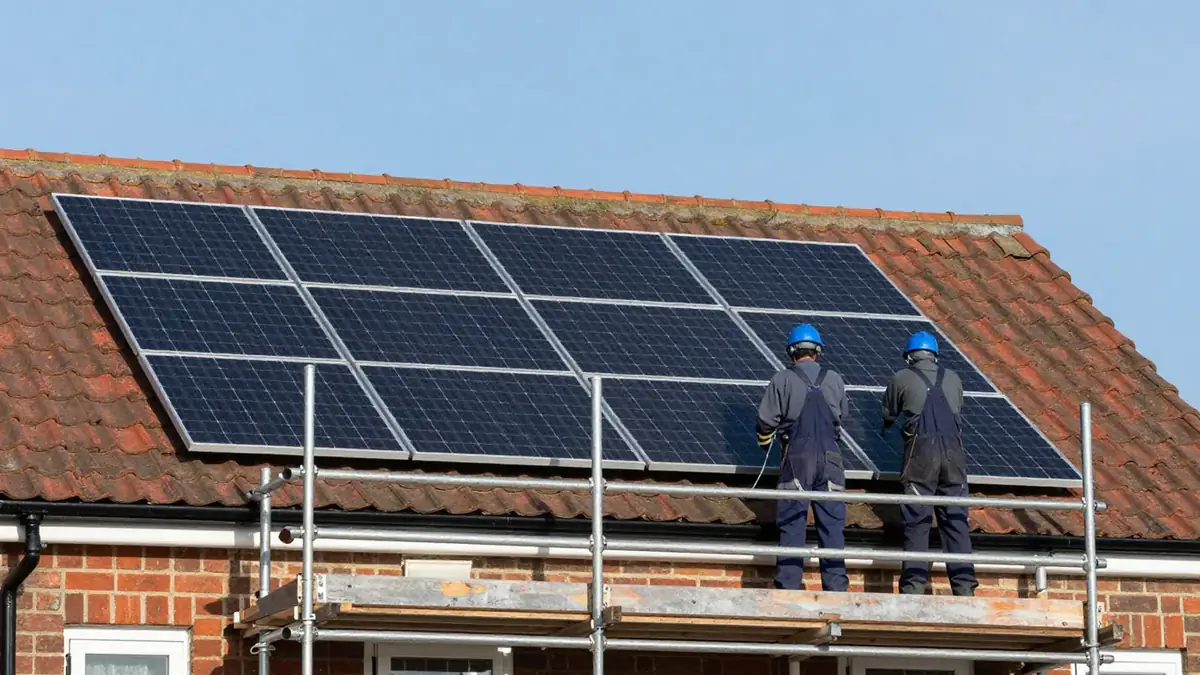
The roof work is the quick part of a solar installation, while the steps before and after take longer. This guide walks through the usual sequence, from a signed quote to a working system.
We only give timescales that official or consumer sources publish. Where no reliable figure exists, we say so, because honest gaps beat invented weeks.
Step 1: sign the contract and use your cooling-off rights
Your clock starts when you accept a quote, so before you sign, check the scope in the quote, including what the price covers and what it leaves out.
Citizens Advice says you get a 14-day cooling-off period, although only if the business approached you away from its premises and the service costs £42 or more. The period begins the day after you enter the contract. If you ask for work to start during that time, the business can keep what covers the services already provided.
Agree any early start date in writing. That way you know what you would owe if you changed your mind.
Step 2: survey and design
Next, the installer checks your roof, loft, meter position and where the inverter will go. They also decide, because access matters, where scaffolding can stand. This is the point where you confirm the layout and panel count.
We could not find an official figure for how long a survey or design takes, so we leave those out. Ask each installer for dates in writing. Compare them when you compare solar quotes.
Step 3: the network operator
Your local network operator, often called the DNO, needs to know about any new generator, since it runs the local grid. The process depends on system size.
Smaller systems, up to and including 16 A per phase, follow the Energy Networks Association’s G98 route. MCS says no prior permission is needed. You notify the network operator within 28 days of the system being commissioned, and your installer normally does this.
Larger systems follow G99 instead, and the rules differ. MCS says prior permission to connect will need to be granted before you proceed. Read G98 and G99 applications explained for the full difference.
This step can delay a G99 job, because you wait on the operator. We found no sourced figure for typical waits, so ask your installer what they expect for your area.
Step 4: scaffolding
Many roof jobs need scaffolding. It usually goes up before the panels do, and it comes down afterwards. Our post on what scaffolding adds to a solar quote explains the cost and the common ways installers price it.
Scaffolding is also a reason to check dates. If the scaffolder and the installer do not agree a slot, the whole job slips.
Step 5: fitting the panels
Which? says that once the scaffolding is up, the panels could go on in less than a day. It adds that roof size and system complexity change the timing. A small, simple roof is quicker than a large or awkward one.
A flat roof, or a roof with several faces, still takes more planning. See solar panels on a flat roof if yours is flat. Planning rules can also affect timing, as our planning permission guide shows.
Wiring work, the inverter and any battery add to the schedule. So ask your installer for a day-by-day plan rather than a single “install date”.
Step 6: commissioning and paperwork
After fitting, the installer tests and commissions the system. Then the paperwork follows, because the grid and your records both need updating. For a G98 system, that includes notifying the network operator within 28 days.
MCS says certified installers must issue your MCS certificate directly to you, and this should happen within 10 days of commissioning. Chase it if it does not arrive. Keep it with your other records, as our post on selling a house with solar panels explains.
If you lose a certificate, MCS says to contact your installer first. MCS generates a replacement itself only if the installer is no longer MCS certified or trading, and it charges £30 plus VAT (£36 in total) for a copy.
Questions that shorten the wait
Some delays are avoidable. A missing document or an unsigned form can hold things up. Reply to your installer quickly, and keep copies of every document.
Ask four things up front. Who applies to the network operator, you or the installer? Who books the scaffolding? When will you receive the MCS certificate? What happens if weather delays the roof work? Our list of questions for your installer covers more.
What a realistic timeline looks like
Putting it together, three parts are well sourced, although the rest vary. The roof work can take under a day once scaffolding stands. The network operator notification is due within 28 days of commissioning for a G98 system. The MCS certificate should reach you within 10 days.
The parts without sourced timings are the wait from contract to survey, design time, and G99 operator waits. Those depend on your installer and your area. Compare what London installers quote with how installers in Wales price and schedule jobs, then ask local installers for local dates.
Before you commit, review the solar panel cost guide so you know what a fair price covers. Then ask for dates in writing, and treat vague answers as a signal to keep comparing.